Services >
An arthrogram is a specialized imaging procedure that involves injecting contrast material into a joint before an MRI or CT scan. The contrast helps provide more detailed images of structures such as cartilage, ligaments, tendons, and the joint capsule. Arthrograms are commonly performed to evaluate shoulder, hip, knee, wrist, and other joint injuries.
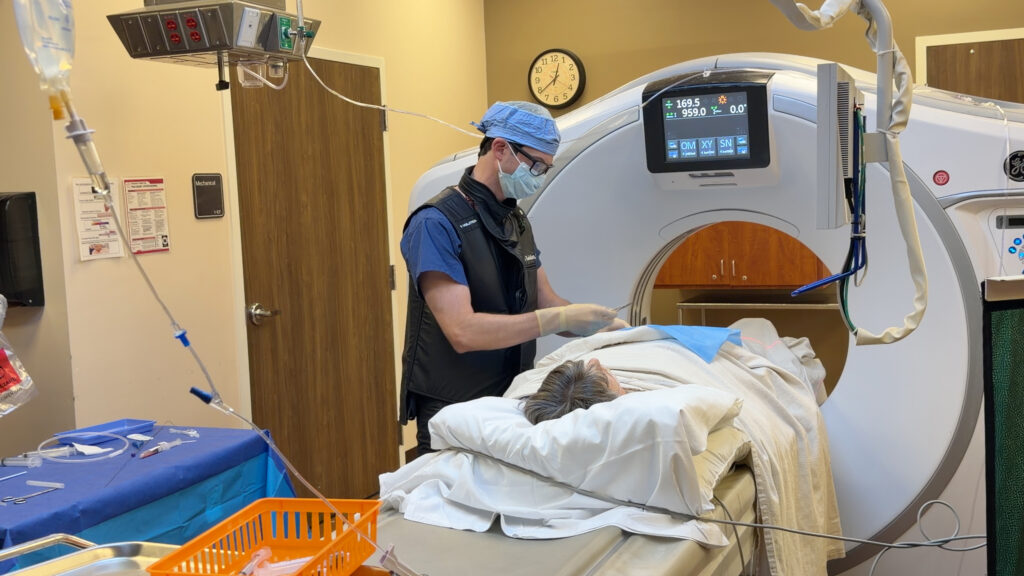
Image-guided biopsies use CT or ultrasound to obtain small tissue samples from areas of concern throughout the body. These minimally invasive procedures help diagnose cancer, infections, and other conditions without the need for surgery in many cases. The tissue is sent to a laboratory for detailed analysis to guide your treatment.
CT Enterography is a specialized CT scan that provides detailed images of the small intestine after you drink a special contrast solution. It is commonly used to evaluate Crohn’s disease, inflammation, bleeding, and other disorders affecting the small bowel. The exam offers detailed images that help guide diagnosis and treatment.
Image-guided fluid drainage procedures use ultrasound or CT imaging to safely remove excess fluid from the body. These procedures can help relieve pain, reduce infection, and improve symptoms caused by fluid collections or abscesses. Using imaging guidance allows the physician to precisely target the area while minimizing risk.
Some interventional radiology procedures are performed exclusively in the hospital because they require specialized equipment, anesthesia support, or inpatient care. These minimally invasive procedures treat a wide range of conditions using image-guided techniques, often resulting in smaller incisions, less pain, and shorter recovery times than traditional surgery. Your physician will determine whether a hospital-based procedure is appropriate for your care.
Image-guided injections and aspirations use imaging technology to accurately place medication or remove fluid from joints, soft tissues, or other areas of the body. These procedures may help relieve pain, reduce inflammation, diagnose joint conditions, or improve mobility. Imaging guidance helps ensure precise treatment.
An Interventional Radiology Consultation gives you the opportunity to meet with one of our interventional radiologists to discuss your condition and treatment options. During your visit, your physician will review your medical history, imaging studies, and answer your questions to determine whether an image-guided procedure is right for you. Together, you’ll develop a personalized treatment plan designed to meet your individual needs.
A myelogram is a specialized imaging exam that uses contrast material and fluoroscopy to evaluate the spinal canal, spinal cord, and nerve roots. It is often performed when MRI cannot be completed or when additional detail is needed. A CT scan is typically performed immediately afterward to provide even more detailed images of the spine.
Image-guided spine procedures are performed to diagnose and treat certain causes of back and neck pain. Using fluoroscopy or CT guidance, physicians can accurately place medication or obtain important diagnostic information while minimizing discomfort. These procedures may help relieve pain and improve function.

Find the right department for scheduling, billing, medical records, and more.